ADHD medications in Scotland
What is prescribed, how it works, and what Scottish NHS guidance says
How ADHD medication is prescribed in Scotland
In Scotland, ADHD medication must be initiated by a specialist, typically a consultant psychiatrist, associate specialist, or nurse prescriber with specialist ADHD training. Once a stable dose has been established, ongoing prescribing can be continued by your GP under a shared care arrangement.
This page summarises the medications listed in the NHS Scotland Right Decisions medicines guidance for ADHD. Right Decisions is NHS Scotland's official clinical guidance platform.
First-line: methylphenidate
Methylphenidate is the most commonly prescribed ADHD medication in Scotland. It works by increasing dopamine and noradrenaline activity in the brain.
Immediate-release tablets
Immediate-release methylphenidate typically lasts 3–5 hours per dose, so it is usually taken two or three times a day.
| Brand | Strengths |
| Generic methylphenidate | 5mg, 10mg tablets |
| Ritalin® | 10mg tablets |
| Medikinet® | 5mg, 10mg, 20mg tablets |
Modified-release formulations
Modified-release (MR) formulations deliver methylphenidate throughout the day from a single morning dose. Different brands use different release mechanisms, which affects how long they last and when the medication reaches its peak level in the body.
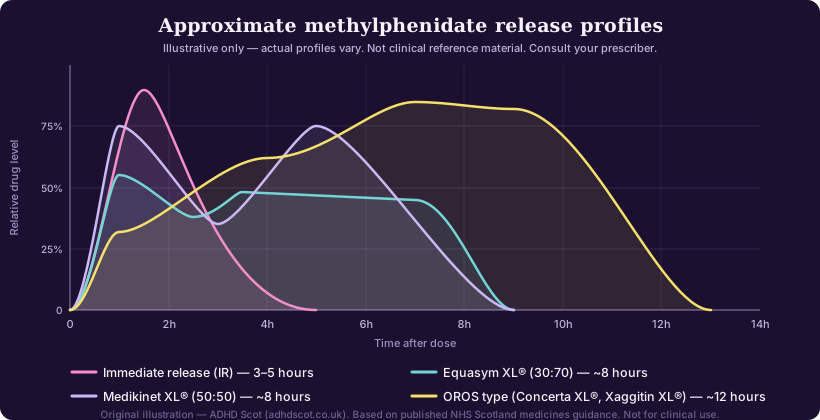
Illustrative diagram — original work by ADHD Scot. Release profile proportions based on published Summaries of Product Characteristics (SPCs) available via the Electronic Medicines Compendium (EMC) and NHS Scotland Right Decisions formulary guidance. For photographs and full product details of each tablet or capsule, see the product's patient information leaflet (PIL) on the EMC.
There are three licensed release mechanisms used by UK brands. Because the profiles differ significantly, NHS Scotland guidance requires modified-release methylphenidate to be prescribed by brand name, not generically. If your pharmacy substitutes a different brand without clinical review, speak to your prescriber.
OROS mechanism (22% immediate : 78% extended) — approximately 10–12 hours
The OROS (Osmotic Release Oral System) design releases medication gradually through osmotic pressure, producing a gradual build through the morning rather than an immediate peak.
| Brand | Strengths |
| Concerta XL® | 18mg, 27mg, 36mg, 54mg tablets |
| Affenid XL® | 18mg, 27mg, 36mg, 54mg tablets |
| Atenza XL® | 18mg, 27mg, 36mg, 54mg tablets |
| Focusim XL® | 18mg, 27mg, 36mg, 54mg tablets |
| Kixel XL® | 18mg, 27mg, 36mg, 54mg tablets |
| Matoride XL® | 18mg, 27mg, 36mg, 54mg tablets |
| Xaggitin XL® | 18mg, 27mg, 36mg, 54mg tablets |
30:70 mechanism (30% immediate : 70% extended) — approximately 8 hours
| Brand | Strengths |
| Equasym XL® | 10mg, 20mg, 30mg capsules |
50:50 mechanism (50% immediate : 50% extended) — approximately 8 hours
The 50:50 design produces two distinct phases: an early peak from the immediate-release portion, and a second sustained level a few hours later.
| Brand | Strengths |
| Medikinet XL® | 10mg, 20mg, 30mg, 40mg capsules |
| Meflynate XL® | Various — check with your pharmacist |
| Metyrol XL® | Various — check with your pharmacist |
For patient information leaflets (PILs) and full product details, visit the Electronic Medicines Compendium (EMC) and search by brand name.
Second-line: lisdexamfetamine (Elvanse®)
Lisdexamfetamine is a prodrug that the body converts into dexamfetamine, the active compound. This design makes it longer-acting (up to 13–14 hours) and reduces the potential for misuse compared to shorter-acting stimulants.
It is typically considered when methylphenidate has not provided adequate benefit or has caused unacceptable side effects.
| Brand | Licensed for | Strengths |
| Elvanse® | Children aged 6 and over | 20mg, 30mg, 40mg, 50mg, 60mg, 70mg capsules |
| Elvanse Adult® | Adults | 20mg, 30mg, 40mg, 50mg, 60mg, 70mg capsules |
The capsules can be opened and the contents dissolved in water, yogurt, or orange juice for people who cannot swallow capsules whole.
Older stimulant: dexamfetamine
Dexamfetamine sulfate tablets (5mg) remain available for people where other stimulants have not been effective. In Scotland it is licensed for ages 6–18. It has a shorter duration of action than lisdexamfetamine and is typically taken two or three times a day.
Third-line: non-stimulant options
Atomoxetine (Strattera® and generic)
Atomoxetine is the main non-stimulant alternative when stimulants are not suitable, for example where there is a history of cardiovascular problems, stimulant misuse, or significant anxiety. It is a selective noradrenaline reuptake inhibitor (SNRI) and takes 4–6 weeks to reach full effect. It is licensed for children aged 6 and over and for adults.
| Form | Strengths | Notes |
| Strattera® capsules | 10mg, 18mg, 25mg, 40mg, 60mg, 80mg, 100mg | Originator brand |
| Generic atomoxetine capsules | Various | Available from multiple manufacturers |
| Oral solution (4mg/ml) | Various volumes | NHS Scotland restricts this to people who cannot swallow capsules |
Guanfacine (Intuniv®)
Guanfacine is a non-stimulant option licensed for children and young people aged 6–17. It is used where stimulants are not suitable, not tolerated, or have not been sufficiently effective. It must be used as part of a broader ADHD treatment programme that includes psychological and educational support.
| Strengths | Notes |
| 1mg, 2mg, 3mg, 4mg prolonged-release tablets | Must not be crushed or chewed |
Monitoring
NHS Scotland guidance recommends that before starting ADHD medication, a baseline physical assessment is carried out including weight, height (in children), blood pressure, and heart rate. These should be monitored at least every six months once medication is established.
Height monitoring in children is important because stimulant medications can temporarily affect growth rate in some young people.
Your local GP surgery can often do this for private requirements, seek advice from your surgery first. You can self report blood pressure, heart rate and weight for adults to private clinics, which is what many do. You can purchase home blood pressure monitors online which are of a good standard.
Medication alongside other support
The Royal College of Psychiatrists and SIGN both note that medication alone is rarely the full picture. For children and young people in particular, medication is most effective when used alongside:
- Parent training programmes
- Educational support and adjustments
- Cognitive behavioural therapy (CBT) adapted for ADHD, where available
For adults, psychological support (including CBT adapted for ADHD and coaching) can help with organisation, time management, and emotional regulation alongside or instead of medication.
Availability of psychological support on the NHS in Scotland is currently very limited. Many people access this privately or through peer support.
Scotland-specific clinical guidance
SIGN — Scottish Intercollegiate Guidelines Network
SIGN produces clinical guidelines for NHS Scotland. SIGN 112, "Management of attention deficit and hyperkinetic disorders in children and young people," provides Scotland-specific guidance on assessment and treatment. All SIGN guidelines are free to access at sign.ac.uk.
Scottish Medicines Consortium (SMC)
The SMC evaluates new medicines and advises NHS Scotland on which should be accepted for routine use. Some medications accepted by NICE in England may have a different or delayed SMC recommendation for Scotland. If you are prescribed a medication and your GP says it is "not approved for Scotland," the SMC decision is the relevant reference. You can check decisions at scottishmedicines.org.uk.
Royal College of Psychiatrists (RCPsych)
RCPsych produces patient information leaflets reviewed by consultant psychiatrists. Their resources on ADHD medication are publicly available and written in plain English for patients and families. RCPsych in Scotland is the Scottish division of the college and contributes to Scottish clinical standards.
Medication and shared care in Scotland
A common situation in Scotland is that a specialist initiates medication but the GP declines to continue prescribing under shared care, particularly after a private diagnosis. This leaves people either paying for ongoing private prescriptions or going without medication.
See our After your diagnosis page for more information on the shared care issue and what options are available if your GP declines.
Trusted sources
- SIGN — Scottish Intercollegiate Guidelines Network — Scotland's clinical guideline body; SIGN 112 covers ADHD in children and young people
- Scottish Medicines Consortium — SMC decisions on which medicines are approved for NHS Scotland use
- NICE NG87 — ADHD: diagnosis and management — the main UK-wide clinical guideline
- Electronic Medicines Compendium (EMC) — official patient information leaflets for all licensed UK medications
Page last reviewed for accuracy: